
What are the different types of solar photovoltaic systems? How to choose one?
Three different types of photovoltaic systems
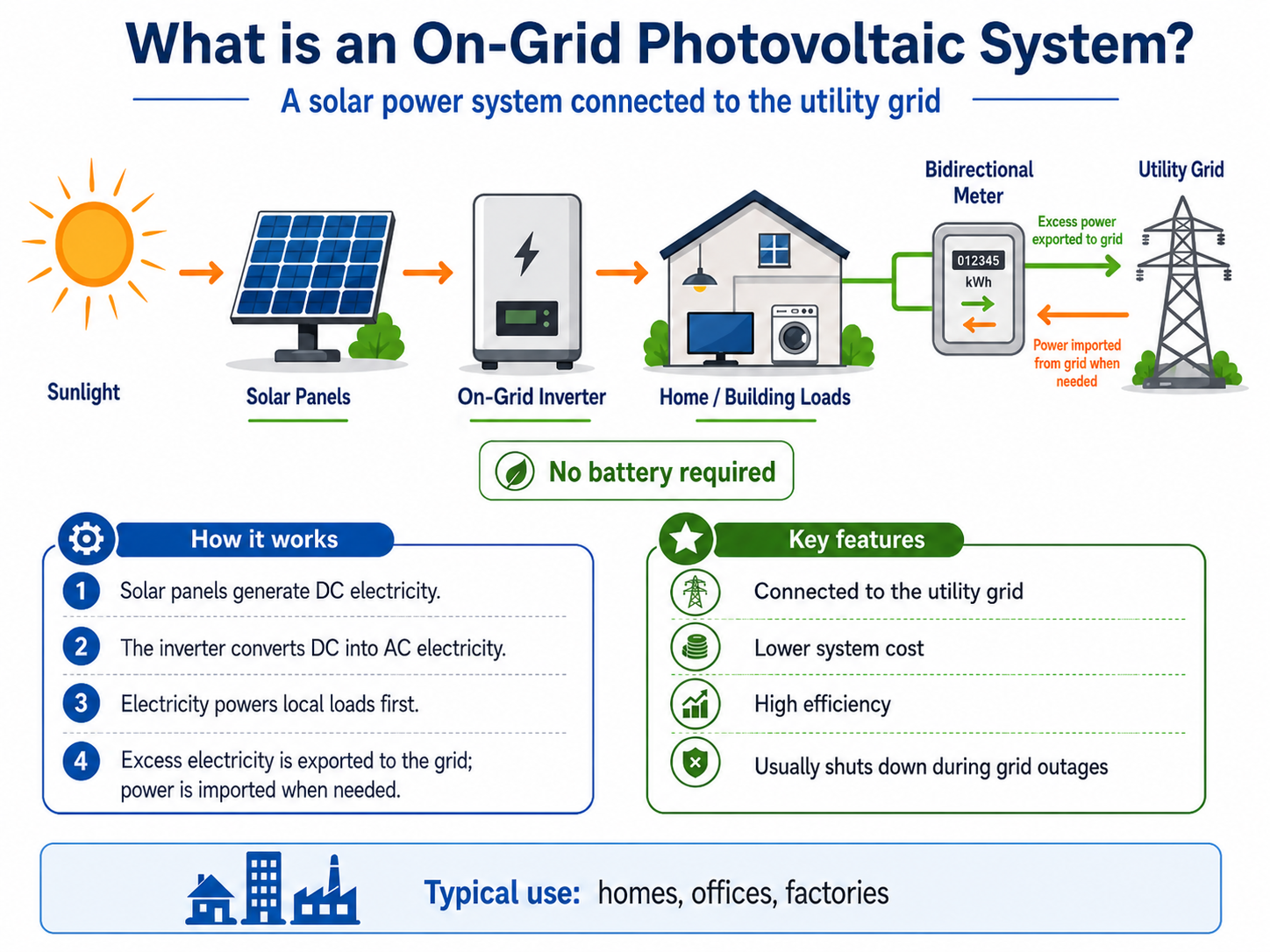
01. On-Grid Photovoltaic System
Best for users with a stable utility grid who want to reduce electricity costs.
How It Works
Solar Panels → On-Grid Inverter → Loads ↔ Utility Grid
Solar panels generate DC electricity, which is converted into AC electricity by the On-Grid Inverter and supplied to local loads first.
- When solar generation exceeds consumption, excess electricity can be exported to the utility grid.
- When solar generation is insufficient, the utility grid automatically supplies the additional power.
- Battery storage is usually not required.
Key Advantages
- Simple system structure
- Lower initial investment
- High solar energy utilization
- Effective electricity cost reduction
- Low maintenance requirements
Typical Applications
Homes / Offices / Commercial Buildings / Factories
Ideal for residential, commercial, and industrial locations with a stable utility grid.
Best for: Reducing electricity costs.
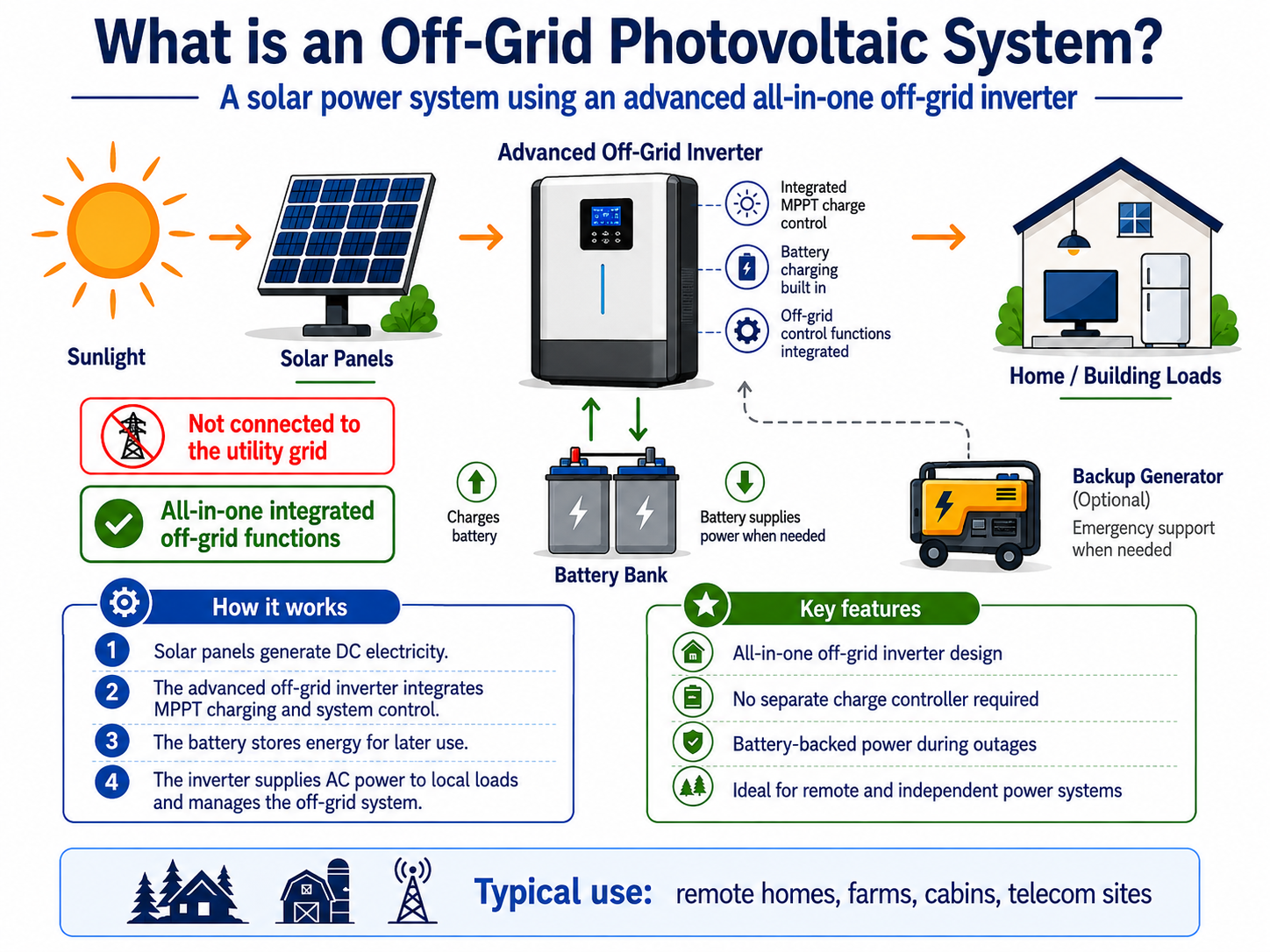 02. Off-Grid Photovoltaic System
Best for users without access to the utility grid or those requiring independent power supply.
Modern off-grid systems use an Advanced All-in-One Off-Grid Inverter, integrating MPPT solar charging, battery charging and discharging, inverter output, and off-grid system control into one unit.
During the day, solar energy powers the loads first while excess energy charges the battery. At night or when solar production is low, the battery supplies power to the loads.
With this integrated design, a separate traditional solar charge controller is not required, making the system simpler and more efficient.
Key Advantages
- Completely independent from the utility grid
- Integrated off-grid system control
- Built-in MPPT solar charging management
- Battery-supported power supply
- Optional backup generator support
Typical Applications
Remote Homes / Farms / Cabins / Islands / Telecom Sites
Ideal for remote homes, farms, cabins, islands, telecom stations, and areas without utility grid access.
Best for: Independent power supply.
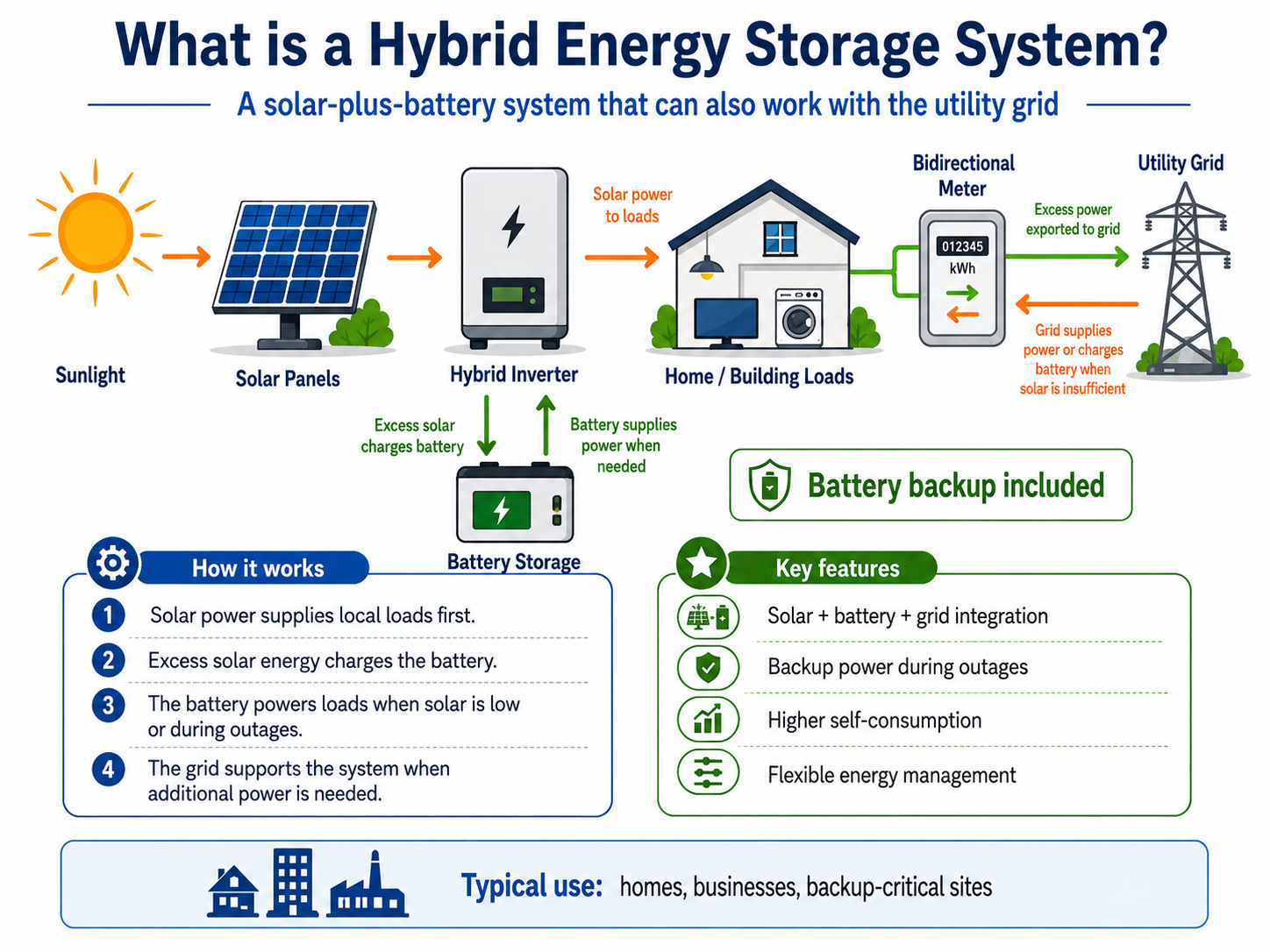
03. Hybrid Energy Storage System
Best for users who have access to the utility grid but also require battery storage and backup power.
A Hybrid system intelligently manages Solar + Battery + Grid.
Solar energy powers local loads first, while excess energy can charge the battery. At night or when solar production is insufficient, the battery supplies power to the loads. If both solar and battery power are insufficient, the system automatically draws electricity from the utility grid.
When equipped with Backup / EPS functionality, the battery can continue supplying essential loads during a grid outage.
Key Advantages
- Smart integration of Solar + Battery + Grid
- Higher solar self-consumption
- Backup power capability
- Reduced dependence on grid electricity
- Flexible energy management
Typical Applications
Homes / Businesses / Offices / Backup-Critical Applications
Ideal for homes, shops, offices, and applications where reliable power supply is important.
Best for: Energy saving + backup power.
Quick Selection Guide
Stable utility grid + lower electricity bills → On-Grid
No utility grid + independent power supply → Off-Grid
Utility grid + battery storage + backup power → Hybrid